• Home
  • Rates
  • Book Now
  • Directions
  • Wheelchair Friendly
  • Gallery
    • Family Room 1
    • Family Room 2
    • Twin Room 3
    • Twin Room 4
    • Double Room 5
    • Property
    • Port Elizabeth
  • Blog
  • Out and about
  • Reviews
  • Menu
  • Skip to primary navigation
  • Skip to secondary navigation
  • Skip to main content
  • Skip to primary sidebar
  • Skip to footer

Dempsey's Guest House

Self Catering in Walmer, Port Elizabeth, Nelson Mandela Bay, South Africa

  • Home
  • Rates
  • Book Now
  • Directions
  • Wheelchair Friendly
  • Gallery
    • Family Room 1
    • Family Room 2
    • Twin Room 3
    • Twin Room 4
    • Double Room 5
    • Property
    • Port Elizabeth
  • Blog
  • Out and about
  • Reviews

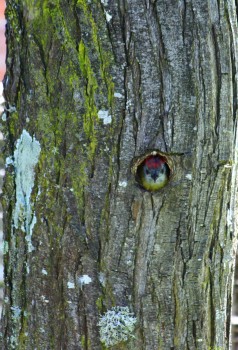
Olive woodpecker nesting in our tree.

June 3, 2018 //  by Kathy

Spring is in the air and our garden is alive with activity, especially after the good rains we’ve had. Nesting in one of the ancient syringa trees is a woodpecker family. The photos show a parent keeping vigil. Today we saw a fluffy, baby, grey head pop out of the hole. Sweetness! If we are allowed closer, photos of the baby will follow. The Olive Woodpecker has two isolated subspecies in Africa – one is in Central Africa, and the other is endemic to South Africa, living in evergreen forests. It forages in the upper canopies of trees, probing pecking branches and licking with its barbed tongue. Both sexes excavate the nest, which is usually a oval-shaped hole in the trunk of a tree. Egg-laying season is from August-November, peaking from September-October.It lays 2-3 eggs, which are incubated by both sexes for roughly 15-16 days. The chicks are cared for by both parents, leaving the nest at about 24-26 days old. The juveniles return to the nest to roost for about 3 months, after which they become fully independent. Several adaptations combine to protect the woodpecker’s brain from the substantial pounding that the pecking behaviour causes: it has a relatively thick skull with relatively spongy bone to cushion the brain; there is very little cerebrospinal fluid in its small subarachnoid space; the bird contracts mandibular muscles just before impact, thus transmitting the impact past the brain and allowing its whole body to help absorb the shock; its relatively small brain is less prone to concussion than other animals. Source: Wikipedia     028   018a 015

Please follow and like us:
RSS
Facebook
Facebook
fb-share-icon
Instagram

Category: NewsTag: Dempseys, Nelson Mandela Bay, News, Port Elizabeth, Sights, Tourists

Realtime Online Booking:

Book Now at Dempsey's

Previous Post: « Moses
Next Post: King Protea spotted in suburbia! »

Primary Sidebar

Book Now at Dempsey's

Recent Posts

  • Guest review from Ann
  • Guest review from: Sue Martin
  • Guest review from: Liyabona.
  • Guest review from: Linda and Thelma.
  • Guest review from Elsa.

Recent Comments

  • Kathy on Guest review from Ann
  • Kathy on Guest review from: Sue Martin
  • Kathy on Guest review from Elsa.
  • Kathy on Guest review from: Keren
  • Kathy on Guest review from: Olga Gasa

Footer

RSS feed: PR News PR News

  • Top SA Banks and Debt Counsellors Recognised at 2026 Debt Review Awards
  • From Jozi and Gaborone to Cairo: Straight Talk From African Writers on Leadership and Unity
  • Isaiah Rashad Turns South African Debut Into a Celebration of Music, Growth and Connection
  • TBT the Black Trumpet a Powerful New Voice to Independent Global Music
  • Constitutional Court Upholds Animal Well-Being in South Africa

RSS feed: Gqeberha News Gqeberha News

  • Home
  • Rates
  • Book Now
  • Directions
  • Wheelchair Friendly
  • Gallery
  • Blog
  • Out and about
  • Reviews

Copyright © 2026 · Dempsey's Guest House · Design and SEO: Reach Trust